

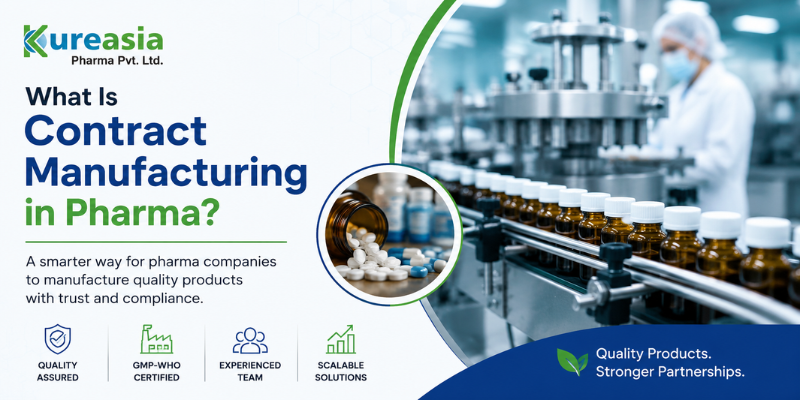
The pharmaceutical industry is one of the most highly regulated and quality-focused industries in the world. Manufacturing medicines requires advanced infrastructure, skilled professionals, strict quality control systems, and compliance with various regulatory standards. However, not every pharmaceutical company has the resources or need to establish its own manufacturing facility. This is where contract manufacturing in pharma becomes an effective business solution.
Over the years, contract manufacturing has become a preferred model for pharmaceutical companies, healthcare brands, PCD pharma businesses, and exporters looking to launch or expand their product portfolios. By partnering with an experienced manufacturer, companies can bring quality healthcare products to market without investing heavily in production facilities.
What Is Contract Manufacturing in Pharma?
Contract manufacturing in pharma refers to the process of outsourcing the manufacturing of pharmaceutical products to a specialized third-party manufacturer. The manufacturer produces medicines according to the client’s specifications, quality requirements, and regulatory guidelines, while the products are marketed and sold under the client’s brand name.
In simple terms, a pharmaceutical company focuses on branding, marketing, and distribution, while the manufacturing partner handles production, quality control, packaging, and compliance.
This model allows businesses to access world-class manufacturing capabilities without the challenges associated with operating their own production units.
Why Is Contract Manufacturing Important?
The pharmaceutical market is becoming increasingly competitive. Companies need to launch products quickly, maintain quality standards, and meet customer demands while controlling costs.
Contract manufacturing helps businesses achieve these objectives by providing:
- Faster product launches
- Reduced operational costs
- Access to advanced manufacturing facilities
- Regulatory compliance support
- Production scalability
- Consistent product quality
As a manufacturer, we have seen how contract manufacturing enables businesses to focus on growth while ensuring their products are produced according to industry standards.
How Does Pharmaceutical Contract Manufacturing Work?
The process of pharmaceutical contract manufacturing follows a structured approach to ensure quality, consistency, and compliance.
Product Selection
The client identifies the products they want to market. These may include tablets, capsules, syrups, injectables, nutraceuticals, dermatology products, or specialty formulations.
Requirement Analysis
The manufacturer reviews the product specifications, packaging requirements, target market regulations, and production expectations.
Commercial Agreement
Both parties finalize pricing, production quantities, timelines, and quality standards before manufacturing begins.
Manufacturing Process
The products are manufactured using approved raw materials and standardized production procedures. Every stage follows Good Manufacturing Practices (GMP) to maintain quality and safety.
Quality Testing
Comprehensive quality checks are conducted throughout the manufacturing process. Each batch undergoes testing to ensure it meets required specifications.
Packaging and Delivery
Once approved, the products are packaged according to brand requirements and dispatched to the client for distribution and sale.
Benefits of Contract Manufacturing in Pharma
Contract manufacturing offers several advantages for pharmaceutical businesses of all sizes.
Reduced Capital Investment
Setting up a pharmaceutical manufacturing facility requires substantial investment in infrastructure, machinery, laboratories, utilities, and regulatory approvals. Contract manufacturing eliminates these costs and allows businesses to launch products with lower financial risk.
Faster Time-to-Market
Since manufacturers already have established facilities and production systems, companies can introduce products more quickly than building their own manufacturing unit.
Access to Manufacturing Expertise
Experienced manufacturers have technical teams, quality assurance professionals, and regulatory experts who ensure products meet industry standards.
Regulatory Compliance
Reputable manufacturers operate according to GMP, WHO-GMP, ISO, and other quality certifications. This helps ensure product safety, efficacy, and compliance.
Production Scalability
As market demand grows, manufacturing volumes can be increased without requiring additional investments from the client.
Focus on Core Business Activities
Companies can dedicate their resources to marketing, sales, distribution, and brand building while leaving production to manufacturing experts.
Contract Manufacturing vs Own Manufacturing
One of the most common questions pharmaceutical businesses ask is whether they should establish their own manufacturing facility or outsource production.
| Factor | Contract Manufacturing | Own Manufacturing |
|---|---|---|
| Initial Investment | Low | High |
| Infrastructure Requirement | Not Required | Required |
| Time to Market | Faster | Slower |
| Operational Cost | Lower | Higher |
| Compliance Management | Shared | Fully Managed Internally |
| Production Flexibility | High | Limited by Capacity |
For many growing pharmaceutical businesses, contract manufacturing offers a practical and cost-effective alternative.
Who Should Consider Contract Manufacturing?
Contract manufacturing is suitable for a wide range of healthcare businesses.
Pharma Startups
New companies can enter the market without investing in manufacturing infrastructure.
PCD Pharma Companies
PCD businesses can expand their product portfolios and serve larger markets efficiently.
Healthcare Brands
Healthcare companies can focus on customer acquisition and brand development while outsourcing production.
Nutraceutical Companies
Supplement and wellness brands can benefit from certified manufacturing expertise and quality assurance.
Pharmaceutical Exporters
Export-focused businesses can leverage internationally compliant facilities to serve global markets.
Why India Is a Preferred Destination for Pharma Contract Manufacturing
India has established itself as one of the world’s leading pharmaceutical manufacturing hubs. The country offers a combination of skilled manpower, modern manufacturing facilities, and cost-effective production capabilities.
Key advantages include:
- WHO-GMP-certified facilities
- Strong pharmaceutical ecosystem
- Competitive manufacturing costs
- Regulatory expertise
- Large-scale production capacity
- Global export capabilities
These factors have made India a trusted destination for pharmaceutical contract manufacturing worldwide.
How to Choose the Right Contract Manufacturing Partner
Selecting the right manufacturing partner is critical for long-term success.
When evaluating a manufacturer, consider the following:
Certifications and Compliance
Choose a manufacturer with GMP, WHO-GMP, and ISO certifications.
Quality Assurance Systems
Ensure the company follows strict quality control procedures and batch testing protocols.
Manufacturing Capacity
The facility should have sufficient capacity to support future business growth.
Product Portfolio
A broad product range demonstrates manufacturing expertise and flexibility.
Industry Experience
Experienced manufacturers are better equipped to manage production challenges and regulatory requirements.
Timely Delivery
Reliable production schedules and supply chain management help ensure uninterrupted product availability.
The Future of Contract Manufacturing in Pharma
The pharmaceutical manufacturing landscape continues to evolve rapidly. Advances in automation, digital quality management systems, artificial intelligence, and data-driven manufacturing processes are improving efficiency and product consistency.
In addition, rising demand for generic medicines, nutraceuticals, specialty drugs, and export-oriented products is creating new opportunities for contract manufacturers.
As healthcare markets continue to expand, contract manufacturing will remain a critical growth driver for pharmaceutical companies around the world.
Frequently Asked Questions
What is contract manufacturing in pharma?
Contract manufacturing is the outsourcing of pharmaceutical product manufacturing to a certified third-party manufacturer.
Why do pharmaceutical companies choose contract manufacturing?
Companies choose contract manufacturing to reduce investment costs, access advanced manufacturing facilities, maintain regulatory compliance, and focus on marketing and business growth.
What products can be manufactured through contract manufacturing?
A wide range of products can be manufactured, including tablets, capsules, syrups, injectables, ointments, creams, nutraceuticals, and herbal formulations.
How do I choose the right pharma contract manufacturing company?
Choose a manufacturer with GMP certifications, strong quality control systems, adequate production capacity, industry experience, and a proven record of timely product delivery.
Partner with Kureasia Pharma for Reliable Contract Manufacturing
Looking for a trusted pharmaceutical contract manufacturing partner? Kureasia Pharma provides high-quality manufacturing solutions backed by advanced facilities, stringent quality standards, and regulatory compliance. Whether you are launching a new product, expanding your portfolio, or entering new markets, our experienced team ensures consistent quality, timely delivery, and end-to-end manufacturing support. Connect with Kureasia Pharma today to bring safe, effective, and market-ready pharmaceutical products to your customers with confidence.