

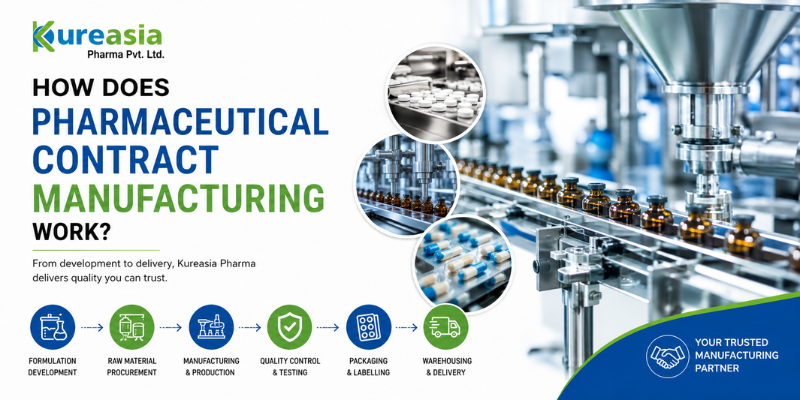
The pharmaceutical industry relies heavily on contract manufacturing to meet growing market demands while maintaining product quality, regulatory compliance, and operational efficiency. Pharmaceutical contract manufacturing is a business model in which a pharmaceutical company outsources the production of medicines, supplements, or healthcare products to a specialized manufacturing company. This approach allows businesses to focus on research, branding, marketing, and distribution while experienced manufacturers handle production.
As the healthcare sector continues to expand, pharmaceutical contract manufacturing has become an essential solution for startups, established pharmaceutical brands, healthcare distributors, and international exporters seeking reliable production capabilities.
Lorem ipsum dolor sit amet, consectetur adipiscing elit. Ut elit tellus, luctus nec ullamcorper mattis, pulvinar dapibus leo.
What Is Pharmaceutical Contract Manufacturing?
Pharmaceutical contract manufacturing refers to an agreement where a pharmaceutical company partners with a third-party manufacturer to produce products according to specified formulations, quality standards, and regulatory requirements. The contract manufacturer provides the infrastructure, technical expertise, manufacturing facilities, and quality assurance systems necessary to produce pharmaceutical products at scale.
These services can include:
- Product formulation and development
- Raw material sourcing
- Manufacturing and production
- Quality testing and assurance
- Packaging and labeling
- Warehousing and logistics support
This model helps pharmaceutical businesses reduce investment costs while gaining access to advanced manufacturing facilities and industry expertise.
Why Do Companies Choose Contract Manufacturing?
Many pharmaceutical companies prefer contract manufacturing because it offers several advantages:
Cost Efficiency
Building and maintaining a pharmaceutical manufacturing facility requires significant investment in equipment, infrastructure, regulatory compliance, and skilled personnel. Contract manufacturing eliminates these expenses and enables companies to launch products more quickly.
Faster Market Entry
Experienced manufacturers already have established production systems and regulatory approvals. This allows pharmaceutical companies to introduce new products to the market without lengthy setup processes.
Access to Expertise
Contract manufacturers employ qualified scientists, pharmacists, quality assurance professionals, and production experts who ensure products meet industry standards.
Scalability
Businesses can easily increase or decrease production volumes based on market demand without making substantial infrastructure investments.
Step-by-Step Process of Pharmaceutical Contract Manufacturing
1. Product Consultation and Requirement Analysis
The process begins with discussions between the pharmaceutical company and the contract manufacturer. Product specifications, formulations, dosage forms, packaging requirements, regulatory needs, and target markets are evaluated.
During this stage, both parties establish production timelines, quality expectations, and manufacturing capacities.
2. Formulation Development
If the product is still in the development phase, formulation experts work on creating a stable and effective product. Research and development teams ensure the formulation meets therapeutic objectives and complies with applicable regulations.
Stability studies and compatibility testing may also be conducted to validate product performance.
3. Raw Material Procurement
The manufacturer sources pharmaceutical-grade raw materials from approved and reliable suppliers. Every ingredient undergoes strict quality checks before entering the production process.
Raw material testing typically includes:
- Identity verification
- Purity assessment
- Microbiological testing
- Compliance with pharmacopeial standards
4. Manufacturing and Production
Once raw materials are approved, the manufacturing process begins. Depending on the product type, production may involve:
- Tablet manufacturing
- Capsule filling
- Syrup production
- Injectable manufacturing
- Ointment and cream production
- Sachet and powder manufacturing
Modern pharmaceutical facilities follow Good Manufacturing Practices (GMP) to maintain consistency, safety, and quality throughout production.
5. Quality Control and Testing
Quality control is one of the most important aspects of pharmaceutical contract manufacturing. Samples are tested at various stages to ensure products meet required specifications.
Common quality checks include:
- Assay testing
- Dissolution testing
- Stability testing
- Microbial testing
- Uniformity testing
- Packaging verification
Only products that successfully pass all quality assessments proceed to the next stage.
6. Packaging and Labeling
After manufacturing approval, products are packaged according to market requirements and regulatory guidelines.
Packaging options may include:
- Blister packs
- Bottles
- Sachets
- Tubes
- Cartons
Accurate labeling is essential to ensure compliance with local and international pharmaceutical regulations.
7. Storage and Distribution
Finished products are stored under controlled conditions before dispatch. Manufacturers may also provide logistics and distribution support to ensure products reach their intended markets safely and efficiently.
Proper warehousing helps maintain product stability and shelf life.
Regulatory Compliance in Contract Manufacturing
Pharmaceutical manufacturing is a highly regulated industry. Contract manufacturers must comply with national and international quality standards to ensure product safety and efficacy.
Important certifications often include:
- WHO-GMP
- ISO Certifications
- Good Manufacturing Practices (GMP)
- Regulatory approvals for export markets
Compliance ensures that pharmaceutical products consistently meet quality, safety, and performance requirements.
Challenges in Pharmaceutical Contract Manufacturing
Although contract manufacturing offers numerous benefits, selecting the right manufacturing partner is critical.
Key considerations include:
- Manufacturing capacity
- Quality management systems
- Regulatory compliance history
- Technical expertise
- Product portfolio
- Supply chain reliability
- Transparency and communication
A reliable contract manufacturer can significantly impact product success and market growth.
Choosing the Right Pharmaceutical Contract Manufacturing Partner
When evaluating a manufacturing partner, businesses should assess:
- Facility certifications
- Production capabilities
- Research and development support
- Product quality standards
- Regulatory expertise
- Packaging capabilities
- Export experience
Long-term partnerships often lead to better operational efficiency and stronger market performance.
Pharmaceutical contract manufacturing plays a crucial role in the modern healthcare industry by enabling companies to produce high-quality medicines without investing heavily in manufacturing infrastructure. From formulation development and raw material sourcing to production, quality testing, packaging, and distribution, contract manufacturers provide comprehensive solutions that support business growth and product success.
For companies seeking dependable pharmaceutical manufacturing services, partnering with an experienced manufacturer can streamline operations, ensure regulatory compliance, and accelerate market expansion.
Why Choose Kureasia Pharma for Contract Manufacturing?
Kureasia Pharma offers comprehensive pharmaceutical contract manufacturing services supported by modern manufacturing facilities, stringent quality control systems, and industry expertise. The company focuses on delivering reliable, compliant, and high-quality pharmaceutical products tailored to client requirements. With a commitment to innovation, regulatory excellence, and customer satisfaction, Kureasia Pharma serves as a trusted manufacturing partner for businesses looking to scale their pharmaceutical operations efficiently.
FAQs
What is pharmaceutical contract manufacturing?
Pharmaceutical contract manufacturing is the outsourcing of medicine production to a specialized third-party manufacturer that handles formulation, manufacturing, testing, and packaging.
What are the benefits of pharmaceutical contract manufacturing?
Benefits include reduced operational costs, faster product launches, access to manufacturing expertise, regulatory compliance, and scalable production capacity.
How do contract manufacturers ensure product quality?
They follow GMP guidelines, conduct rigorous quality testing, maintain validated processes, and comply with regulatory standards throughout production.
Who can benefit from pharmaceutical contract manufacturing?
Pharmaceutical companies, healthcare brands, exporters, distributors, startups, and private-label businesses can all benefit from contract manufacturing services.
Why is GMP important in pharmaceutical manufacturing?
GMP ensures products are consistently produced and controlled according to quality standards, helping maintain product safety, efficacy, and compliance.
Contact Kureasia Pharma
Looking for a trusted pharmaceutical contract manufacturing partner? Kureasia Pharma provides end-to-end manufacturing solutions, quality assurance, packaging support, and scalable production services to help your business grow in competitive healthcare markets.