

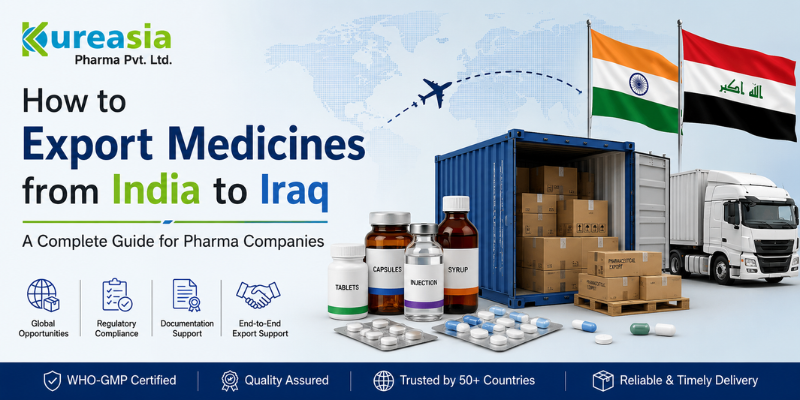
India is one of the world’s leading pharmaceutical exporters, supplying affordable and high-quality medicines to countries across Asia, Africa, Europe, and the Middle East. Among these markets, Iraq has become an important destination for Indian pharmaceutical products due to its growing healthcare needs, expanding hospital infrastructure, and increasing demand for imported medicines.
If you’re planning to export medicines from India to Iraq, simply finding a buyer isn’t enough. Pharmaceutical exports involve regulatory approvals, export documentation, product quality standards, customs compliance, and reliable logistics. Missing even a single document can delay or even stop a shipment.
This guide explains the complete medicine export process from India to Iraq in simple terms so that pharmaceutical manufacturers, exporters, distributors, and importers understand what is required before starting international trade.
Why Does Iraq Import Medicines from India?
India has built a strong reputation as the “Pharmacy of the World.” Indian pharmaceutical companies manufacture a wide range of generic medicines that meet international quality standards while remaining cost-effective.
Several factors make India a preferred pharmaceutical supplier for Iraq:
- Affordable generic medicines
- WHO-GMP compliant manufacturing facilities
- Large production capacity
- Reliable supply chain
- Wide therapeutic product range
- Experience in exporting to regulated and semi-regulated markets
For Iraqi healthcare providers and distributors, Indian medicines offer a balance between quality, availability, and competitive pricing.
Can Medicines Be Exported from India to Iraq?
Yes. Indian pharmaceutical companies can legally export medicines to Iraq, provided they comply with Indian export regulations and Iraqi import requirements.
Both countries have their own regulatory framework. Exporters must ensure that products are manufactured under approved standards and that all required documents accompany every shipment.
Working with an experienced pharmaceutical manufacturer or export partner can help simplify this process.
Documents Required for Exporting Medicines
One of the most important aspects of pharmaceutical exports is documentation. Customs authorities and import regulators verify these documents before medicines are cleared for distribution.
Common export documents include:
- Commercial Invoice
- Packing List
- Import Export Code (IEC)
- Certificate of Origin
- Bill of Lading or Air Waybill
- Certificate of Analysis (COA)
- Certificate of Pharmaceutical Product (COPP)
- Free Sale Certificate (when applicable)
- Insurance Documents
The exact documentation may vary depending on the product category and importer requirements.
How Are Medicines Shipped to Iraq?
Medicines are generally exported through either air freight or sea freight.
Air Freight
Air transport is preferred for:
- Emergency medicines
- Temperature-sensitive products
- Smaller shipments
- Faster delivery
Sea Freight
Sea shipping is suitable for:
- Bulk pharmaceutical consignments
- Regular commercial orders
- Lower transportation costs
The shipping method depends on delivery timelines, product sensitivity, and order quantity.
Importance of Proper Pharmaceutical Packaging
Packaging is much more than product presentation. During international transportation, medicines may experience changes in temperature, humidity, and handling conditions.
Proper packaging helps maintain:
- Product stability
- Safety during transportation
- Shelf life
- Regulatory compliance
Labels should clearly mention manufacturing details, expiry date, batch number, storage instructions, and manufacturer information.
Quality Standards Matter
Before selecting an Indian pharmaceutical supplier, international buyers often verify quality certifications.
Some widely accepted certifications include:
- WHO-GMP
- GMP Compliance
- ISO Certification
- Certificate of Pharmaceutical Product (COPP)
These certifications indicate that medicines are manufactured under recognized quality management systems.
Common Challenges in Pharmaceutical Export
Although pharmaceutical exports offer significant opportunities, exporters may face several challenges:
- Regulatory changes
- Product registration delays
- Documentation errors
- Customs clearance issues
- Cold-chain transportation requirements
- Freight cost fluctuations
Proper planning and regulatory compliance help reduce these risks.
Tips Before Exporting Medicines to Iraq
If you’re entering the Iraqi pharmaceutical market, consider these best practices:
- Research local import regulations.
- Verify product registration requirements.
- Maintain complete export documentation.
- Choose a reliable logistics partner.
- Follow international packaging standards.
- Work with experienced pharmaceutical manufacturers.
These practices improve shipment success and help build long-term business relationships.
Choosing the Right Pharmaceutical Manufacturing Partner
Selecting the right manufacturing partner is one of the most important decisions for pharmaceutical exporters.
Look for a manufacturer that offers:
- WHO-GMP certified manufacturing
- Consistent product quality
- Export documentation support
- Wide product portfolio
- Timely production
- Experience in international pharmaceutical exports
Kureasia Pharma is one such Indian pharmaceutical manufacturer that supports global pharmaceutical businesses with quality manufacturing and export assistance while following international quality standards.
Frequently Asked Questions (FAQs)
1. Can I legally export medicines from India to Iraq?
Yes. Medicines can be legally exported from India to Iraq if exporters comply with Indian export regulations, obtain the necessary licenses, and meet Iraq’s pharmaceutical import requirements.
2. What documents are required to export medicines to Iraq?
The commonly required documents include an Import Export Code (IEC), Commercial Invoice, Packing List, Certificate of Origin, Bill of Lading or Air Waybill, Certificate of Analysis (COA), and Certificate of Pharmaceutical Product (COPP), depending on the product and importer.
3. Do medicines need to be registered before being sold in Iraq?
In many cases, pharmaceutical products must be registered with the relevant Iraqi health authorities before they can be imported and distributed. Requirements may vary depending on the medicine category.
4. Which medicines are commonly exported from India to Iraq?
India exports a wide range of pharmaceutical products, including antibiotics, anti-diabetic medicines, cardiovascular drugs, pain management medicines, gastrointestinal medicines, oncology products, nutraceuticals, tablets, capsules, syrups, and injections.
5. Which certifications are important for pharmaceutical exports?
International buyers generally prefer medicines manufactured in WHO-GMP-certified facilities. Certifications such as GMP, ISO, COPP, and COA also help demonstrate product quality and regulatory compliance.
6. What is the best shipping method for exporting medicines to Iraq?
Air freight is suitable for urgent or temperature-sensitive medicines, while sea freight is generally preferred for large-volume shipments because it is more cost-effective.
7. What challenges do pharmaceutical exporters commonly face?
Some common challenges include product registration delays, documentation errors, customs clearance issues, changing import regulations, and maintaining product quality during transportation.
8. How can I choose a reliable pharmaceutical manufacturer in India?
Look for a manufacturer with WHO-GMP-certified facilities, strong quality control systems, export experience, regulatory support, and the ability to provide complete export documentation.
Ready to Export Medicines from India to Iraq?
Whether you’re a pharmaceutical importer, distributor, or healthcare business looking to source quality medicines from India, working with an experienced export partner can simplify the entire process. From manufacturing and regulatory documentation to packaging and international shipping support, choosing the right pharmaceutical company ensures smoother exports and long-term business success.
Kureasia Pharma offers WHO-GMP-certified pharmaceutical manufacturing and export support for businesses looking to expand into international markets, including Iraq. Connect with our team to discuss your product requirements and explore reliable pharmaceutical export solutions tailored to your business needs.